What My Senior Dog is Still Teaching Me About Love
Last summer, something in Emily shifted.
It wasn’t dramatic. There was no single moment where I could point and say that’s when everything changed. It was quieter than that. She started panting more. She seemed less tolerant of Piggy.
Their relationship, in truth, has been something that took time and intention to grow. They were not an obvious match at the beginning, and I had to be very deliberate about shaping their shared experiences so they could learn to feel safe around one another. Slowly, almost imperceptibly, something softened between them. Over the last couple of years, it felt like we had become a true family.
But around the time her health began to change, that patience thinned again. She was more irritable. More unsettled. Harder to soothe.
At first I told myself it was the heat. Or simply age. Maybe a pain flare from her arthritis.
But the changes stayed.
Eventually the blood tests gave us a name for what we were living with: chronic kidney disease. I remember the strange mixture of relief and dread that comes with diagnosis. Relief that you are not imagining things. Dread because you understand, suddenly and very clearly, that you have stepped into a different chapter of loving them.
Since the autumn, and especially through the winter, Emily has had neurological episodes that still frighten me in a very physical way. They arrive without warning. One minute she is herself — moving through the house in her familiar, careful rhythm — and the next she is somewhere else entirely. Unsteady. Disconnected. Panicked at things that previously seemed to no longer worry her.
In those moments everything narrows. You watch her breathing. You wait. You bargain silently with time.
Each time she has found her way back to us. Sometimes quickly. Sometimes slowly, as though she has to travel a long distance to return. But the episodes are becoming more frequent, and with every one the questions feel heavier.
Are we doing enough?
Are we doing too much?
Are we helping her — or just trying to protect ourselves from the inevitability of losing her?
Our vet has helped us navigate likely causes and possible treatments, but there is still so much uncertainty. And uncertainty has a way of seeping into daily life. It settles into your routines. Your sleep. Your conversations.
Part of what makes this experience particularly complex is the shape of Emily’s place in our family.
I adopted her from Romania several years ago, during a completely different chapter of my life, with a previous partner. In many ways she belongs to more than one story. Even now, from afar, that person still cares deeply about her and checks in regularly to ask how she is doing. Emily has always had a quiet way of gathering people around her like that.
At the time I brought her home, I was naive. I had very little understanding of the trauma she carried. I had great aspirations for what we would do together and given the chasm between my dreams and her reality, it’s no surprise that our relationship has never been effortless.
It has been something built slowly, sometimes painfully, through mistakes on my part and through learning how to meet her where she was rather than where I expected her to be. Loving her has often meant reflection and repair. A kind of steady, imperfect dedication.
But in many ways, I have come to believe Emily was always meant for Jan, my partner.
There is an ease between them that feels almost inevitable. Their connection is deep and uncomplicated in a way that ours never quite was. Where Emily and I have had to work to find each other, she seems to settle into Jan instinctively — softer, calmer, more certain. Sometimes I wonder if my role in her life was simply to help carry her to this place, to make their meeting possible.
It isn’t that I don’t love her. I do, profoundly. But loving Jan seems to come naturally to her. Watching them together now, in this fragile stage of her life, is both beautiful and quietly heartbreaking.
My partner and I have not always agreed about how far to go with diagnostics or treatment. We have different instincts about risk, about intervention, about how to balance hope with realism. Loving the same dog does not mean experiencing her decline in the same way. There have been difficult conversations. Moments of frustration. Moments where fear has spoken louder than reason.
There have also been uncomfortable reflections about fairness. Piggy, our younger dog, has received more aggressive investigation when health concerns have arisen. He is only four. His future feels expansive in a way Emily’s no longer does. Logically, this makes sense. Emotionally, it can still feel tangled and painful to acknowledge.
Life with a medically fragile senior dog quietly reshapes itself around them. Medication routines. Monitoring food and water. Adjusting environments to reduce stress. Planning work, travel, even social plans around the possibility of an episode. None of it feels dramatic from the outside, but inside it can feel like living in a constant state of low-level vigilance.
Then there is the financial reality. The steady accumulation of vet bills. The mental arithmetic of deciding which tests will truly change outcomes and which are driven by fear of regret. The guilt that can accompany both spending and not spending.
But more than anything, this stage has been defined by emotional ambiguity.
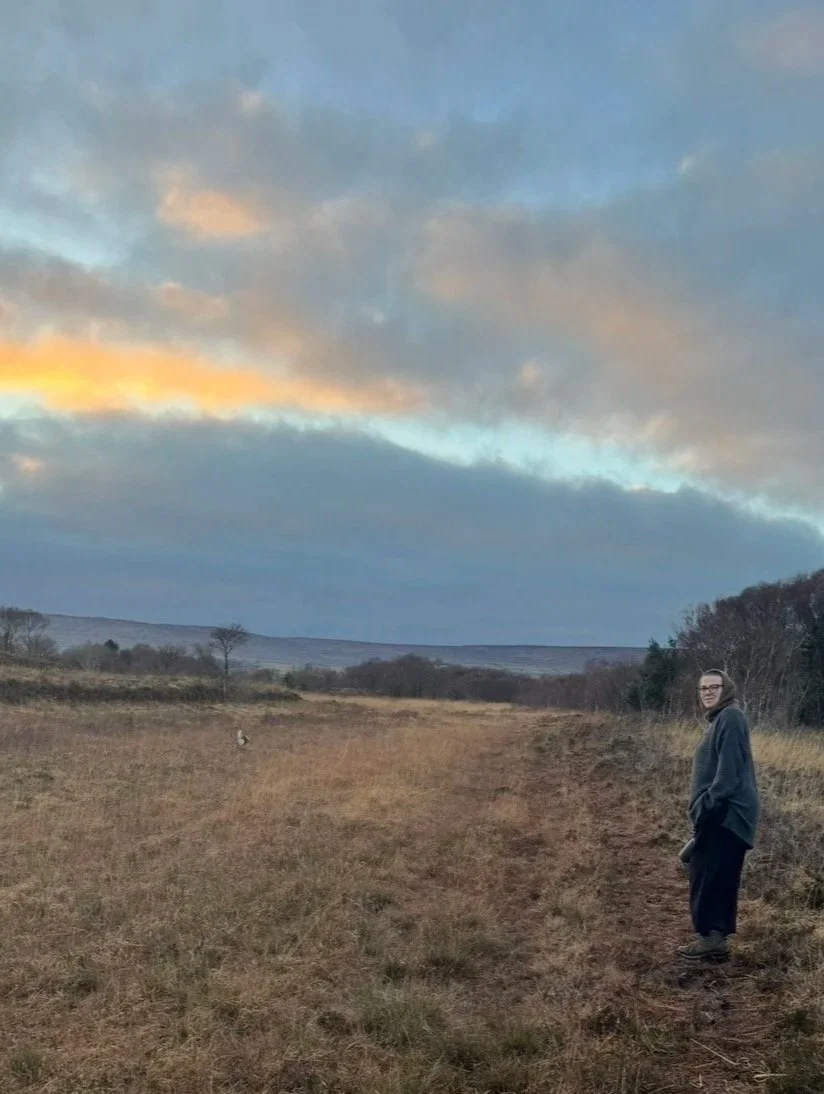
Emily still has good days where she gallops along the bog with abandon. She still seeks warmth and familiarity. She still has moments of quiet contentment that feel achingly normal. And that makes every decision harder. We are not responding to a single crisis. We are living in a long, uncertain middle.
Over time my goal with her has become simpler.
I am not chasing cure.
I am not trying to out-think ageing.
I want her to feel safe.
I want her to be free from pain.
I want the time she has left — however much that may be — to feel gentle and safe and loving.
As a behaviour professional, this experience has been deeply humbling. We spend our working lives helping others navigate difficult welfare decisions. We talk about frameworks and assessment tools and objective measures of quality of life.
But when it is your own dog, objectivity dissolves. Knowledge does not protect you from grief. Experience does not make uncertainty easier to hold. If anything, it sharpens your awareness of how little control we truly have.
Sometimes late at night, when the house is quiet, I watch Emily sleeping beside Jan and feel the weight of this long season of loving her. The slow preparation for an ending that has not yet arrived. The strange coexistence of gratitude and anticipatory loss.
I am sharing this because even those of us who work in this field are not immune to the same doubts and strains our clients face. Loving an ageing dog is rarely a clear story with a defined turning point. More often, it is a series of small, imperfect choices made in the shadow of uncertainty.
If you are walking a similar path, please know you are not alone.
There is no flawless way to do this.
There is only the quiet, ongoing act of showing up with compassion.
For them.
For each other.
For ourselves.
For now, Emily is still here.
Still deeply loved.
Still teaching us how to stay.
